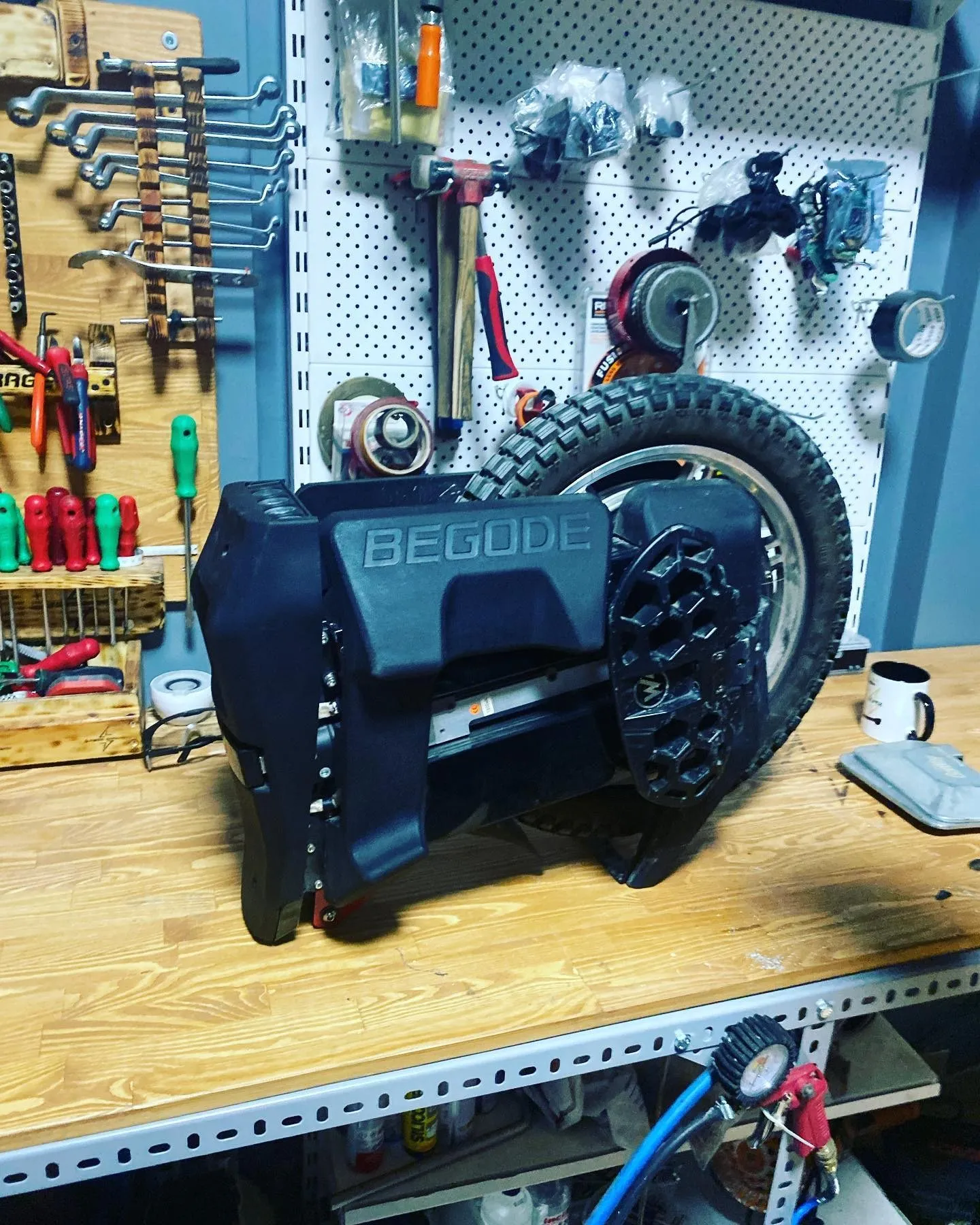
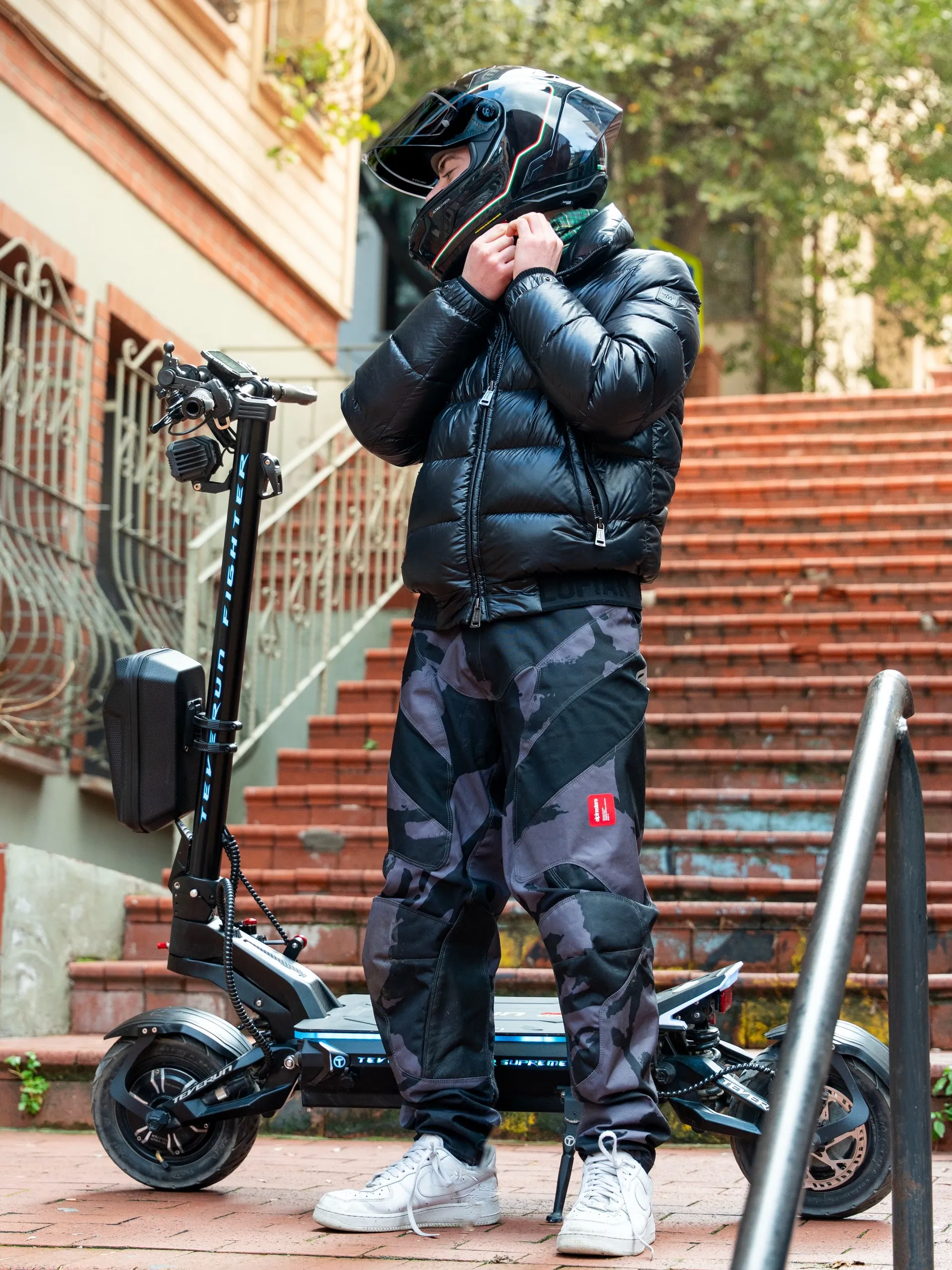
Winter doesn’t mean you have to lock your scooter away in the garage. But cold, rain and short days put both the battery and you to the test in different ways. This guide is about riding safely all winter — and finding your scooter as good as new when spring comes round.
Range drops — and that’s normal
In the cold, lithium-ion cells can deliver less energy and their internal resistance goes up. The result: fewer kilometres on the same route. A noticeable drop in range in winter isn’t a fault; the capacity comes back once the weather warms up.
How big is the drop? It depends on the temperature, your speed and the road. For your own scooter, change the temperature in our range calculator and see the difference.
Tips:
- Keep the scooter, and especially the battery, indoors somewhere warm.
- Heading out on a long ride? A full charge isn’t enough on its own: set off with a battery that has warmed up indoors.
- Hills and stop-start riding eat into your range even more in winter; plan your route accordingly.
Charging rules in the cold
- Never charge below 0 °C. Charging in the cold can permanently damage the cells.
- Don’t plug the scooter in the moment you bring it in from outside; wait for the battery to reach room temperature.
- The battery’s favourite range is 15–35 °C.
Rain and water
An IPX rating isn’t a “wetsuit”. IPX4, IPX5 or IPX6 ratings mean resistance to splashing water up to a certain level; they don’t mean the scooter is waterproof.
- Stay out of puddles. Deep water can reach the motor, the connectors and the battery compartment.
- Don’t pressure-wash it; wipe it down with a damp cloth.
- After riding in the rain, dry the scooter off and leave it somewhere dry.
- The salt spread on the roads in winter speeds up corrosion on metal parts; after riding on salted roads, clean the underside in particular.
Water damage isn’t covered by most manufacturers’ warranties — so prevention is far cheaper than repair.
Riding on wet roads
- Braking distances get longer. Slow down, and brake early and progressively.
- Hard, sudden braking on a wet surface is asking for a slide. Running regenerative braking at a medium setting makes the ride smoother.
- Road markings, manhole covers and wet leaves are as slippery as ice; don’t brake or lean on them.
- On powerful scooters, the wheel spins up more easily in the fastest mode; pick a calmer riding mode for the winter.
Tyres
Tyre pressure drops in the cold. Through the winter, check it once a week and bring it back up to the manufacturer’s recommended value. Worn, hardened or cracked tyres won’t grip on wet roads; it may be time to replace them.
See and be seen
Winter days are short. The Turkish Electric Scooter Regulation requires a white light at the front so that other road users can easily spot you at night. Make sure your rear light and reflectors work too; a light-coloured or reflective vest makes a big difference.
Clothing
- A helmet is a must in every season; in winter, wear one with a visor or with goggles.
- Choose gloves that let you move your fingers; don’t let thick gloves rob you of the feel of the brakes and throttle.
- A windproof, light-coloured outer layer keeps you warm and makes you visible.
If you won’t ride all winter
- Bring the battery to 40–60% charge.
- Store the scooter somewhere dry and frost-free.
- Check the voltage every now and then; our voltage chart shows you the percentage.
- In spring, check the tyre pressure, brakes and bolts before your first ride.
Pre-winter checklist
| Check | Why? |
|---|---|
| Brake pads and adjustment | Braking distances get longer on wet roads |
| Tyre tread and pressure | Grip |
| Lights | Short days, poor visibility |
| Connector and cable insulation | Moisture and corrosion |
| Battery test | The cold exposes weak cells |
| Bolts and folding mechanism | Vibration and safety |
If you’d rather not do your winter service yourself, book an appointment — diagnostics are free.