Choose well, and a used electric scooter can give you the same thrill as a new one for half the price. Choose badly, and you get a tired battery, a bent frame or a machine of unknown origin. This guide walks you through what to look at before you buy — through a mechanic’s eyes.
1. Pin down what you need first
Four questions decide which scooter suits you: what will you use it for, what’s your budget, how much speed do you need, and will you be able to carry it?
A rough breakdown:
| Use | Example class |
|---|---|
| City riding, short distances, portability | Lightweight, single-motor models |
| Daily commute, medium range | Zero 10X, Vsett 10+ class |
| Comfort and long distances | Nami, top-end Segway |
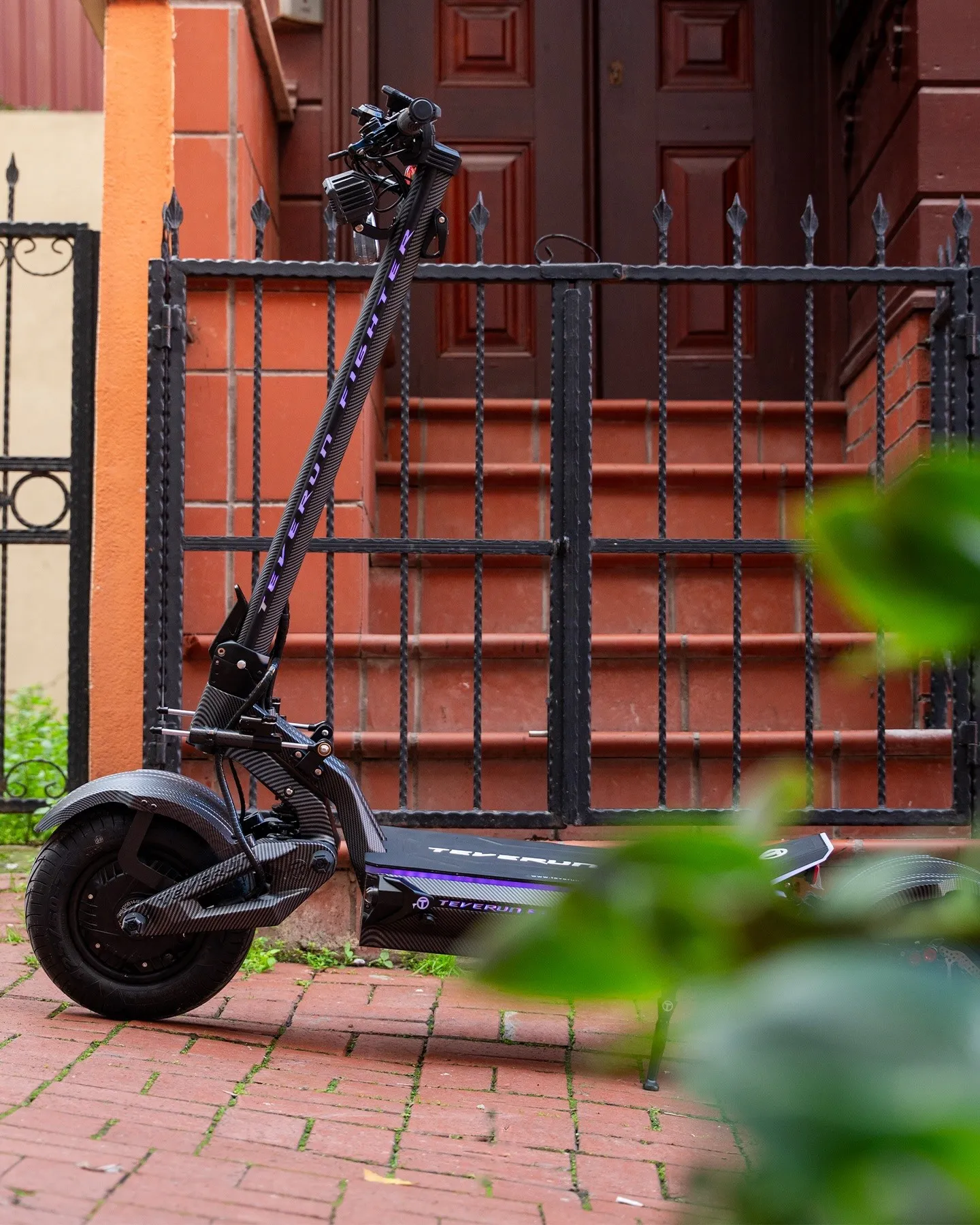
| Performance | Teverun Fighter series |
| Extreme performance | Teverun Fighter Supreme 7260R class |
Remember: the legal limit on public roads is 25 km/h. If you have nowhere to use it, a high-performance machine is just a heavier, more expensive scooter.
2. Paperwork and history
- Ask for the invoice and, if there is one, the warranty certificate. The warranty usually belongs to the first buyer; check whether it can be transferred.
- Compare the serial number on the frame or battery with the one on the invoice.
- Ask about the service history: which parts have been replaced, and where has it been serviced?
- If the seller can’t show you any paperwork and the price looks “too good to be true”, be careful. Buying a stolen scooter will cost you your money and land you in trouble.
3. The battery: the most expensive part
The battery accounts for most of a used scooter’s value.
- Measure the resting voltage and compare it with our voltage chart. The charge level the seller claims and the voltage should match.
- On models with an app (e.g. Teverun), check the cell voltages and temperatures. A big difference between cells means imbalance.
- If on a short ride the voltage sags heavily when you open the throttle, or the scooter cuts out, the battery is tired.
- If you find swelling, a smell or signs of moisture in the battery compartment, walk away.
4. Frame, folding mechanism and handlebar
- There should be no play or squeaking in the folding mechanism.
- Look for cracks, weld marks or bends on the frame and the stem.
- Rock the handlebar side to side and back and forth; you shouldn’t feel any play.
- Deep scrape marks on the underside can point to hard impacts or a history of kerb jumping.
5. Motor, brakes and tyres
- Spin the wheels freely: there should be no humming, rubbing or play. Impacts can damage the magnets and windings in hub motors.
- Look at the brake discs: a warped disc causes juddering and noise under braking.
- Hydraulic brakes should feel firm and positive, not spongy.
- Check the tyre tread and sidewalls; cracked tyres mean the cost of replacements.
6. Signs of water damage
Greenish oxide on the connectors, rust on the screws, condensation inside the display… These are the signs of a scooter that has had a close encounter with water. Water damage isn’t covered by most manufacturers’ warranties and can cause surprise faults further down the line.
7. Modifications
Has anyone been tinkering with the controller, the battery or the speed limit? Ask.
- A scooter with its speed limit removed isn’t road-legal, and in most cases its manufacturer’s warranty has ended.
- A well-executed modification can add value; one done by guesswork is a risk. The controller, battery, motor and wiring all have to match each other.
8. Test ride
Take a short test ride somewhere safe, away from traffic:
- Any hesitation or jerking when you pull away?
- Do the brakes bite straight and evenly?
- Any handlebar wobble at high speed?
- Any error codes on the display?
9. Price
On the used market, prices sometimes creep close to the new price. Weigh up the new price of the same model, whether any warranty is left, the battery’s condition and the mileage together. If a trade-in is an option, put that on the table too.
Quick checklist
| Check | OK? |
|---|---|
| Invoice and serial number match | ☐ |
| Good resting voltage and cell balance | ☐ |
| No play in the frame or folding mechanism | ☐ |
| Quiet motor, no play in the wheels | ☐ |
| Firm brakes, straight discs | ☐ |
| No signs of water damage | ☐ |
| Modifications known | ☐ |
| Test ride trouble-free | ☐ |
If you’d rather not do it yourself
If you want to sell your scooter or find out what it’s worth, let our experts value it. You can bring a scooter you’re thinking of buying in for an inspection before you hand over any money, or browse inspected Storm Approved listings in our pre-owned showroom.